
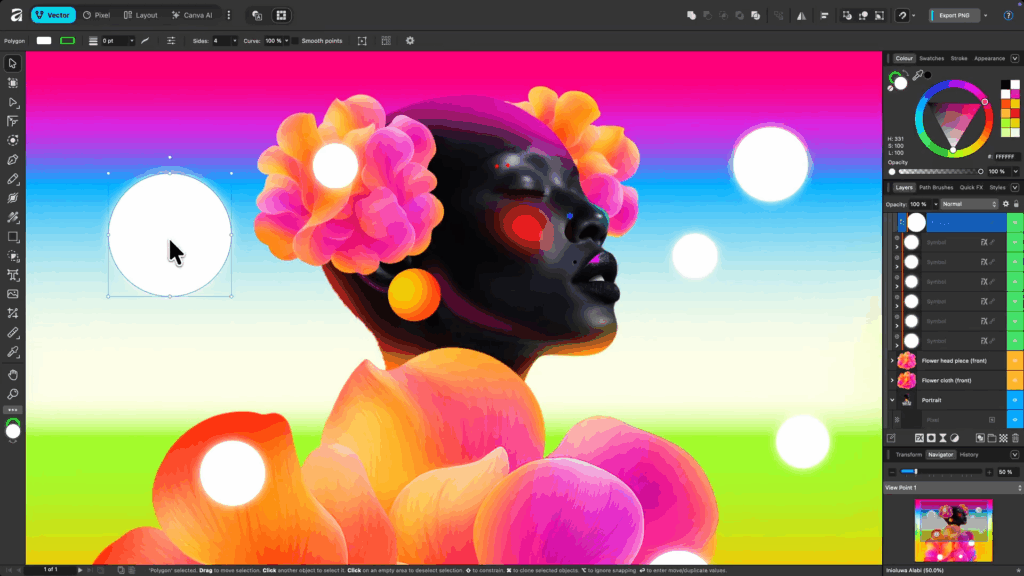
- Composition: This is how you arrange elements within a photo. Proper composition, like using the ‘rule of thirds,’ helps direct the viewer’s eye to important parts of the image. For instance, placing a key subject off-center can make the design more dynamic and engaging.
- Lighting: Lighting can dramatically affect the mood and detail of an image. Different lighting techniques can highlight textures, create shadows, or soften features. For example, backlighting can create a silhouette effect, adding drama and mystery to the image.
- Color Theory: Colors influence emotions and perceptions. Understanding color theory means choosing hues that complement each other to strengthen the visual and emotional coherence of your design. For example, contrasting colors can draw attention to a particular element, while analogous colors can create a more harmonious look.